Post-Remediation Verification in Miami: How to Prevent Future Damage
In Miami, post-remediation verification is one of the most overlooked—but most important—steps in preventing mold from coming back after cleanup. Many homeowners assume that once mold removal is finished, the problem is solved. From real inspections across Miami, that assumption is one of the main reasons we see repeat mold issues months later in the same areas.
Post-remediation verification is not a formality. It is the process that confirms whether mold remediation was done correctly and whether the conditions that caused the mold have truly been resolved. Without it, homeowners are often relying on appearances instead of proof—and in South Florida, appearances can be misleading.
A common Miami homeowner scenario
A mold remediation company removes affected drywall, treats visible mold, and repaints the area. The home looks clean, smells better, and the project is marked complete.
Several months later, a musty odor returns. This time, mold is found in a nearby wall cavity that wasn’t originally addressed. Moisture levels were never verified, and the original source wasn’t fully resolved.
During post-remediation verification, elevated moisture would have been detected early—before the mold had a chance to return.
This scenario happens frequently in Miami homes.
What post-remediation verification actually is
Post-remediation verification (often called clearance testing or clearance inspection) is an independent evaluation performed after mold remediation is completed.
Its purpose is to confirm:
- Affected materials were properly removed or cleaned
- No visible mold remains in treated areas
- Moisture levels have returned to normal
- Containment was effective
- Conditions no longer support mold growth
Verification focuses on results, not effort. It answers the question: Did the remediation actually work?
Why post-remediation verification matters so much in Miami
Miami’s climate makes mold recurrence more likely if anything is missed.
High humidity is constant. AC systems run almost nonstop. Storms, plumbing leaks, and condensation are common. Even small moisture issues can quickly recreate mold-friendly conditions.
Because of this, remediation that would be “good enough” in a dry climate often fails here without proper verification.
In Miami inspections, repeat mold cases almost always trace back to skipped or incomplete post-remediation verification.
Step 1: Visual confirmation of remediation work
The first step of verification is a detailed visual inspection.
Inspectors confirm:
- All affected materials were removed or cleaned
- No visible mold remains
- Repairs align with the original remediation scope
- No new damage occurred during repairs
This step ensures remediation was completed as planned—not just partially.
Step 2: Moisture verification (the most critical step)
Moisture verification is the backbone of post-remediation evaluation.
Inspectors use moisture meters to test:
- Walls and ceilings
- Flooring and baseboards
- Cabinets and vanities
- Areas adjacent to the original mold site
- HVAC-related surfaces
In Miami homes, it’s common to find areas that look dry but still contain elevated moisture. If moisture remains, mold can return—even if cleanup was thorough.
No remediation should be considered complete until moisture levels are confirmed normal.
Step 3: Evaluating adjacent and secondary areas
Mold and moisture rarely stay confined to one spot.
Post-remediation verification extends beyond the original work area to ensure moisture didn’t migrate into:
- Neighboring wall cavities
- Ceiling spaces
- Flooring systems
- HVAC components
This step is crucial in Miami, where moisture spreads easily through building materials.
Step 4: Clearance testing (when appropriate)
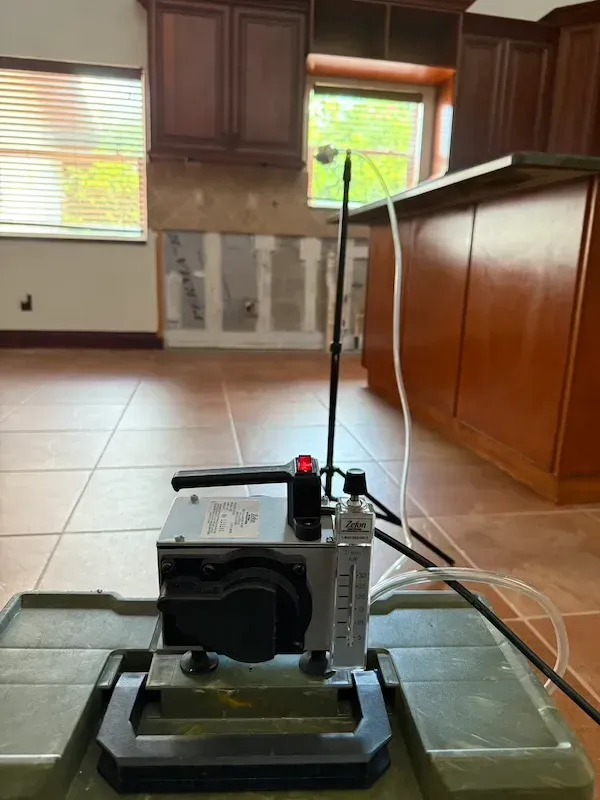
Mold testing and indoor air quality testing may be recommended as part of post-remediation verification—especially when:
- Mold was extensive
- Air quality concerns existed
- Documentation is needed for real estate, insurance, or rentals
Testing compares indoor air to outdoor conditions and supports visual and moisture findings. It does not replace inspection—it confirms it.
In South Florida, testing must always be interpreted in context due to naturally elevated outdoor mold levels.
Step 5: Confirming the moisture source was corrected
One of the most important parts of verification is confirming why mold won’t return.
Inspectors evaluate whether:
- Plumbing leaks were repaired properly
- HVAC drain lines and condensation issues were resolved
- Roof or storm intrusion was corrected
- Ventilation issues were addressed
If the moisture source remains active—even subtly—future mold growth is likely.
Common mistakes homeowners make after remediation
Several mistakes frequently lead to recurring mold damage.
Skipping post-remediation verification entirely and trusting visual results.
Assuming remediation guarantees long-term protection without moisture control.
Closing walls or repainting before moisture is verified.
Using the same company for remediation and verification, eliminating independence.
In Miami, these mistakes almost always lead to repeat problems.
Why remediation without verification often fails
Mold remediation removes symptoms. Verification confirms resolution.
Without verification:
- Moisture issues may persist
- Mold may remain hidden
- Repairs may conceal unresolved conditions
- Future damage goes unnoticed until it’s worse
From Miami inspections, homes that skip verification are far more likely to experience mold recurrence within a year.
How post-remediation verification protects property value
Verification is especially important for real estate.
Buyers, lenders, and insurers want proof that mold issues were resolved correctly. Post-remediation verification provides documentation that:
- The issue was limited
- Moisture was corrected
- The home no longer supports mold growth
Homes with proper verification records move through transactions more smoothly and with fewer concessions.
A professional insight many homeowners don’t expect
One insight that surprises many Miami homeowners is how often post-remediation verification identifies secondary issues—not remediation failures.
The cleanup may be done well, but a nearby HVAC condensation issue, hidden plumbing leak, or attic moisture problem is discovered during verification.
Catching these issues early prevents a second mold problem later.
Practical steps homeowners can take after remediation
Always schedule post-remediation verification before closing walls or final painting.
Ensure moisture readings are documented—not assumed.
Ask whether adjacent areas were evaluated, not just the original mold site.
Maintain HVAC systems and drainage regularly after remediation.
Monitor odors and humidity in the months following cleanup.
Verification is not an extra step—it’s the step that protects your investment.
Why local Miami experience matters
Post-remediation verification is highly climate-dependent.
Miami homes face unique challenges related to humidity, coastal weather, construction styles, and near-constant AC use. Inspectors with local experience understand how mold returns here—and how to prevent it.
At QualityAir Mold Inspection & Testing, our experience performing post-remediation verification throughout Miami allows us to evaluate results objectively and identify risks that are often missed.
If mold remediation was recently completed—or is about to be—starting with independent post-remediation verification is one of the most effective ways to prevent future damage. In some cases, mold testing and indoor air quality testing provide additional documentation. When issues are identified early, targeted mold removal and remediation adjustments can prevent recurrence.
For property-specific guidance, reaching out through our Contact Us page is a practical next step.
Clear guidance moving forward
Mold remediation is not the finish line—verification is.
In Miami’s climate, preventing future mold damage depends on confirming dryness, correcting moisture sources, and verifying results before moving on. By treating post-remediation verification as essential—not optional—homeowners can protect their property, avoid repeat damage, and ensure mold problems stay resolved for the long term.