Indoor Air Quality Testing in West Palm Beach: Expert Advice for Homeowners
In West Palm Beach, indoor air quality is closely tied to humidity, moisture control, and how a home’s HVAC system operates day to day. Many homeowners assume air quality problems are obvious—dust buildup, visible mold, or strong odors. In reality, most air quality issues we evaluate are subtle and develop gradually, especially in South Florida’s climate.
Indoor air quality testing helps clarify what’s happening inside a home when something feels “off,” but the right timing and approach matter. Used correctly, testing provides useful answers. Used blindly, it can create confusion.
A common West Palm Beach homeowner scenario
A homeowner notices the house smells musty when the AC first turns on. Filters are changed regularly, and there’s no visible mold on walls or ceilings. After a few months of ignoring it, a real estate agent or contractor suggests indoor air quality testing to “see what’s in the air.”
This is a typical starting point. The key is understanding what testing can actually tell you—and what should happen before it’s performed.
What indoor air quality testing is designed to evaluate
Indoor air quality testing focuses on identifying whether indoor conditions differ significantly from normal outdoor air and whether something inside the home is influencing that difference.
Depending on the situation, testing may evaluate:
- Airborne mold spore levels
- General indicators of indoor air imbalance
- Conditions linked to moisture or ventilation problems
The goal is not to prove a home is “perfect” or “unsafe,” but to understand whether indoor conditions are consistent with a healthy, dry living environment.
Why air quality concerns are common in West Palm Beach homes
West Palm Beach homes face constant environmental pressure from heat and humidity. Several local factors contribute to air quality issues:
- High humidity most of the year
- AC systems running almost continuously
- Condensation forming around vents and air handlers
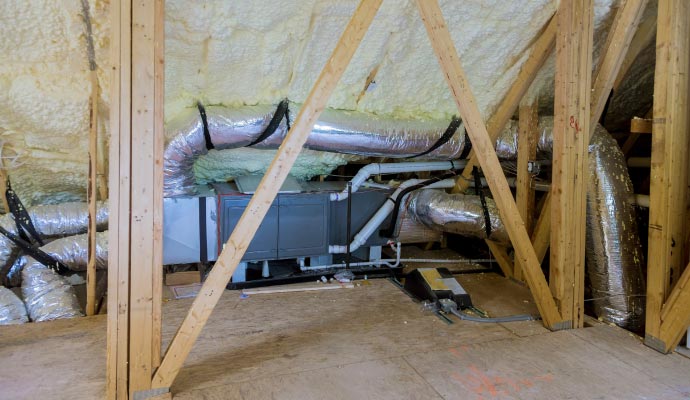
- Air handlers located in closets or attics
- Heavy rain and storm-driven moisture intrusion
When moisture lingers, it can affect air quality even if nothing is visible. That’s why air quality concerns often show up alongside humidity or moisture issues rather than obvious damage.
Early signs that indoor air quality testing may be helpful
Testing is not always necessary, but it can be useful when certain conditions persist.
Situations where indoor air quality testing often adds value include:
- Musty or stale odors with no visible source
- Ongoing humidity issues despite normal AC operation
- Past water damage with no verification of drying
- Buyer or seller requests during real estate transactions
- Concerns about air movement from attics, crawl spaces, or ductwork
Testing helps determine whether these conditions are affecting the air inside the home or are isolated moisture issues.
Indoor air quality testing vs. mold inspection: how they differ
These two services are often confused, but they serve different purposes.
A mold inspection focuses on identifying moisture sources, visible mold, and areas at risk for hidden growth.
Mold testing and indoor air quality testing are used to evaluate whether indoor air conditions are elevated compared to outdoors or influenced by hidden issues.
Inspection usually comes first. Testing is recommended when results will help clarify findings or support decision-making.
What indoor air quality testing can and can’t tell you
Understanding limitations is important.
Indoor air quality testing can help:
- Compare indoor air conditions to outdoor levels
- Indicate whether hidden moisture or mold may be influencing air
- Provide documentation for buyers, sellers, or property managers
- Support post-remediation verification when applicable
Indoor air quality testing cannot:
- Locate the exact source of a problem on its own
- Replace a full inspection
- Fix moisture or mold issues
- Predict future conditions without addressing causes
Testing works best when paired with inspection findings and moisture evaluation.
Why DIY air quality tests often cause confusion
Many homeowners try store-bought air quality or mold test kits before calling a professional. While understandable, these kits frequently lead to unnecessary concern.
Common problems include:
- No outdoor comparison sample
- No control over sampling volume or conditions
- Results without meaningful interpretation
- Confusion over what “normal” actually means
Because mold spores and particles exist in all homes, professional testing focuses on relative levels and context, not just presence.
What professional indoor air quality testing involves
When indoor air quality testing is appropriate in West Palm Beach, it’s done methodically.
A professional process typically includes:
- Reviewing inspection findings and moisture data
- Collecting an outdoor baseline sample
- Taking targeted indoor air samples
- Evaluating HVAC-related airflow and moisture patterns
- Interpreting results alongside building conditions
This approach ensures results answer real questions instead of creating new ones.
You can learn more about how mold inspection and mold testing and indoor air quality testing are used together depending on the situation.
One insight many homeowners don’t expect
Some of the highest indoor air quality concerns we see aren’t tied to visible mold at all. They’re tied to airflow and humidity issues—especially in homes that are overcooled or have restricted return airflow.
In West Palm Beach, managing humidity and air movement is often more important than repeated cleaning or surface treatments.
Practical steps to improve indoor air quality in South Florida
While testing provides clarity, prevention and maintenance make the biggest difference long term.
Effective steps include:
- Keeping indoor humidity controlled year-round
- Maintaining AC systems and drain lines
- Watching for condensation around vents and air handlers
- Improving airflow in closets and rarely used rooms
- Addressing plumbing or roof leaks promptly
- Avoiding extreme thermostat settings
These steps reduce the conditions that most often affect indoor air quality in West Palm Beach homes.
Why local West Palm Beach experience matters
Indoor air quality behaves differently in South Florida than in cooler or drier regions. Local inspectors understand how humidity, construction style, and HVAC design affect air conditions here.
That local experience helps testing stay focused, accurate, and proportional—especially during real estate transactions or post-repair evaluations.
If testing confirms an issue, we can help coordinate appropriate mold removal and remediation and guide next steps based on the actual conditions found.
Calm guidance on next steps
If you’re dealing with musty odors, humidity concerns, or questions raised during an inspection, indoor air quality testing can provide useful clarity—when it’s done for the right reasons.